
The Bundeswehr Joint Force Command
Unified command and control




Unified command and control
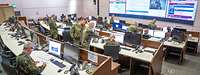
The Bundeswehr Joint Force Command (BwJFC) is responsible for the Bundeswehr’s national and joint planning, conduct and evaluation of operations. It is a central point of contact for civil authorities at the federal and state levels, and a single point of contact for the armed forces of friendly nations as well as multinational partners and actors.
Established in October 2024 as part of the structural reform following the Osnabrück Directive, the Bundeswehr Joint Force Command reflects the Bundeswehr’s consistent orientation towards national and collective defence. The focus is on credible deterrence and effective defence through a unified operational level of command. The BwJFC is designed to be able to take action and exercise command and control in all scenarios and at all escalation levels – including hybrid threat situations, in national and collective defence, and in international crisis management.
The Bundeswehr Joint Force Command is a single command bringing together tasks in the areas of national and collective defence, international crisis management and the Bundeswehr’s assistance, in accordance with Article 35 of the Basic Law for the Federal Republic of Germany (administrative assistance), at the operational level. It
With the regional territorial commands serving as liaison elements in the federal states, the BwJFC is compatible with authorities and organisations throughout Germany. The Counter-IED/Counter-UxS Centre is also subordinate to the Bundeswehr Joint Force Command. It specialises in analysing and countering improvised explosive and incendiary devices and unmanned systems across the Bundeswehr’s entire spectrum of operations.

Lieutenant General Alexander Sollfrank
Commander of the Bundeswehr Joint Force Command

Lieutenant General André Bodemann
Deputy Commander, Bundeswehr Joint Force Command, and Commander, Territorial Tasks.
The Commander of the Bundeswehr Joint Force Command – who is also the National Territorial Commander – bears responsibility at the operational level for the Bundeswehr’s national planning and conduct of missions and operations. This includes national and collective defence, national crisis and risk management, Germany’s contributions to international crisis management, command and control over the functional dimension of the Bundeswehr Special Operations Forces, and assistance in accordance with Article 35(2-3) of the Basic Law for the Federal Republic of Germany (disaster relief).
The Commander of the Bundeswehr Joint Force Command is directly subordinate to the Chief of Defence. In operations planning and at the operational level of command, the Commander is the superior of the chiefs of the individual armed services, the commanders in the Bundeswehr Joint Support Service Headquarters and the commanders of the capability coordination commands. In this capacity, the Commander of the Bundeswehr Joint Force Command prioritises tasks for employment of forces and makes decisions regarding the commitment of forces and allocation of support capabilities.
When the Commander is absent, he is represented in all matters by the Deputy Commander, Bundeswehr Joint Force Command, and Commander, Territorial Tasks. The Deputy Commander exercises control over the subordinate agencies of the Bundeswehr Joint Force Command, maintains close liaison with the federal states via the regional territorial commands, and supports the Commander with measures necessary to implement the Operational Plan for Germany.
On behalf of the Commander, he is also responsible for the Bundeswehr’s tasks regarding administrative assistance and disaster relief under Article 35 of the German Basic Law and decides all respective requests, unless the decision is reserved for the Federal Ministry of Defence. This includes controlling and coordinating the possible deployment of Bundeswehr forces at the operational level. The regional territorial commands are also under his control.
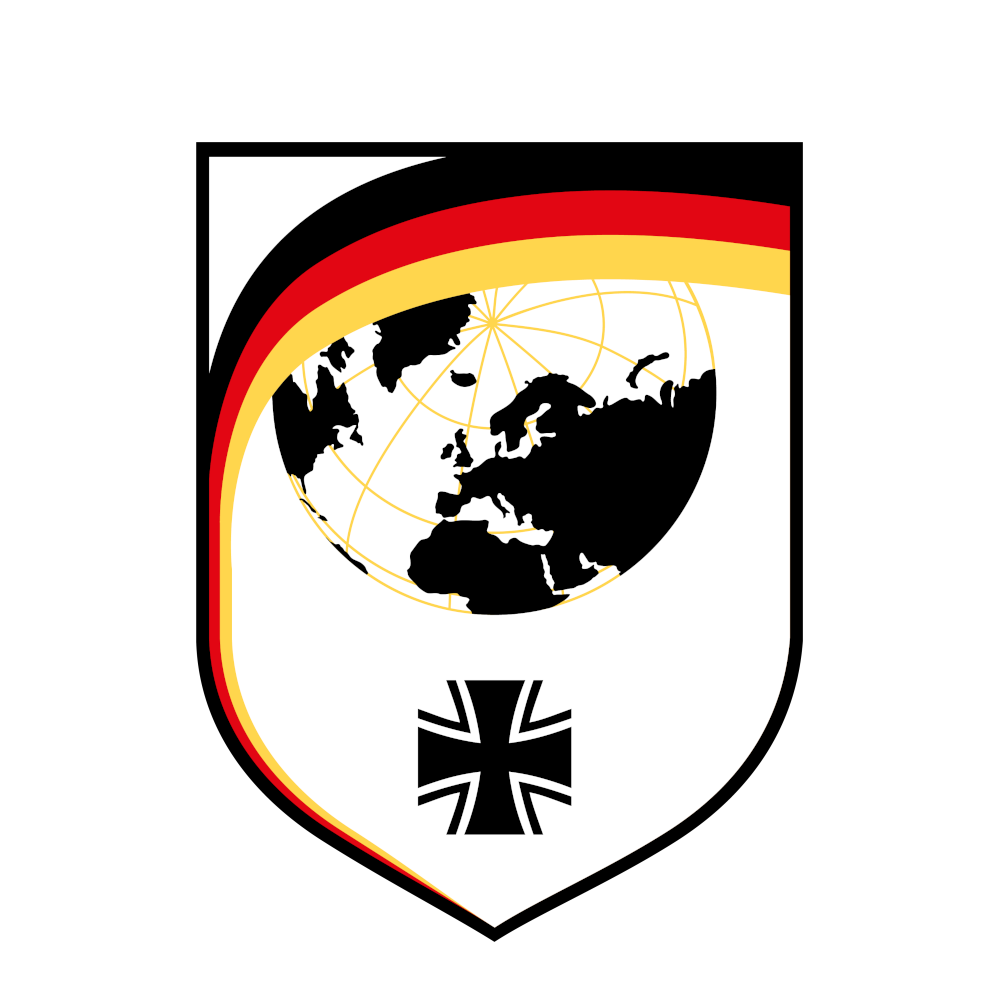
What is the meaning of the insignia of the Bundeswehr Joint Force Command?
The internal unit crest of the Bundeswehr Joint Force Command (in short: crest) symbolically combines the two agencies that were merged to form the new command: the Bundeswehr Joint Forces Operations Command and the Bundeswehr Homeland Defence Command. The personnel of both commands contributed to a competition of ideas for the creation of the new insignia.
The band in black, red and gold underlines the official oath taken by the soldiers to faithfully serve the Federal Republic of Germany and bravely defend the freedom of the German people. It symbolises the identity of the Bundeswehr: United we serve Germany. At the same time, it embodies the territorial tasks as part of national defence.
The stylised globe, showing Europe and the NATO states, reflects the core task of the Bundeswehr Joint Force Command as the main interface with NATO and the European Union. The connecting element is the Iron Cross, which, as the national identification mark of the German armed forces, stands for bravery, love of freedom and chivalry.

Point of contact for media representatives
You may contact us by calling the following phone number. Outside working hours, you will reach the spokesperson on duty.
The Bundeswehr Joint Force Command is based in Berlin and Schwielowsee. With the sixteen regional territorial commands, it is present in all federal states. The Counter-IED/Counter-UxS Centre is also an agency subordinate to the command.


